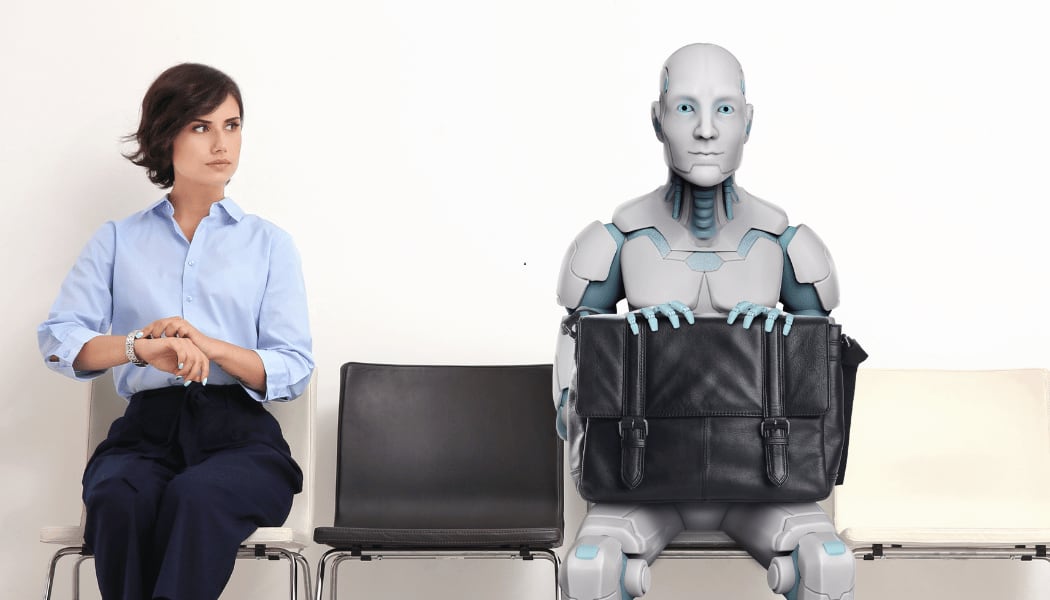
Artificial intelligence is no longer a futuristic concept discussed only in research labs or tech conferences. Today, AI in jobs and careers is transforming how companies hire, train, manage, and support employees across nearly every industry. From healthcare and finance to customer service and education, AI-powered tools are reshaping workplace expectations and redefining professional success.
Businesses now rely on artificial intelligence in workplaces to automate repetitive tasks, improve decision-making, personalize customer experiences, and increase operational efficiency. At the same time, professionals are adapting to entirely new career realities where digital skills, creativity, adaptability, and AI literacy are becoming essential for long-term growth.
The future of jobs with AI is not simply about machines replacing humans. Instead, it reflects a broader AI career transformation where technology handles repetitive processes while people focus on strategy, innovation, leadership, and human-centered problem-solving.
In 2026, organizations worldwide are investing heavily in:
AI workforce trends and automation technologies
AI learning platforms and digital upskilling programs
AI-powered careers in data science, cybersecurity, cloud computing, and analytics
Workforce automation tools for productivity improvement
Remote AI job opportunities and global hiring models
Professionals who understand how AI impacts careers are positioning themselves ahead of workplace disruption. Students are choosing future-ready degrees, working professionals are enrolling in AI certification programs, and companies are redesigning talent strategies around intelligent automation.
This shift is creating one of the biggest employment transformations in modern history.
What Does AI in Jobs and Careers Mean for Modern Professionals?
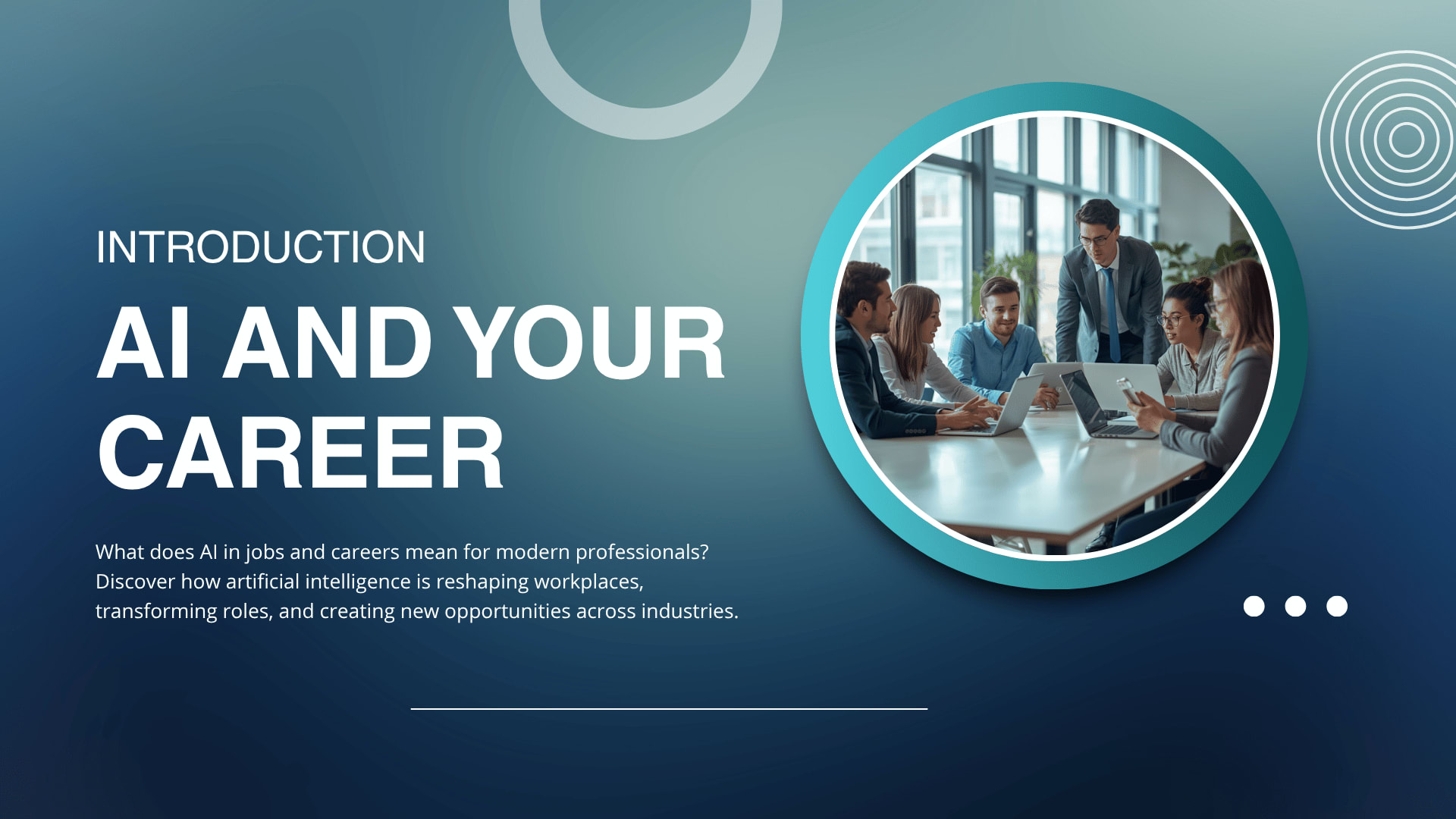
AI in jobs and careers means professionals must now work alongside intelligent systems that automate tasks, analyze data, improve workflows, and support faster decision-making. Rather than replacing all human workers, artificial intelligence in workplaces is creating a major shift toward hybrid human-AI collaboration, requiring employees to build adaptable and technology-focused skills.
Modern professionals are experiencing a workplace evolution where traditional roles are becoming more digital, data-driven, and automation-assisted. AI is influencing how employees communicate, learn, solve problems, and contribute to business growth.
For example:
Marketing teams now use AI tools for campaign optimization
Doctors rely on AI-assisted diagnostics
HR departments automate recruitment screening
Customer support teams use AI chatbots
Financial analysts apply predictive AI models
This AI career transformation is changing not only job descriptions but also the skills employers prioritize.
How is artificial intelligence reshaping jobs and careers across industries?
AI in jobs and careers is reshaping industries by automating repetitive work, improving productivity, creating new digital roles, and enhancing business decision-making. Companies are increasingly combining human expertise with AI systems to improve efficiency, reduce operational costs, and deliver personalized services.
The transformation is visible across both technical and non-technical sectors.
What are the biggest changes AI is bringing to the workplace in 2026?
Several major workplace shifts are defining AI workforce trends in 2026:
Automation of repetitive administrative tasks
Increased demand for AI literacy across departments
Rise of remote AI-powered careers
Data-driven performance management
Faster hiring through AI recruitment tools
Personalized employee learning programs
Human-AI collaboration becoming standard practice
Organizations are now expecting employees to use AI tools daily for communication, analytics, project management, and productivity enhancement.
For example, customer support representatives increasingly rely on AI-assisted response systems that suggest accurate replies in real time. This allows employees to handle more complex customer interactions while routine queries are resolved automatically.
Why are businesses rapidly adopting AI-driven workforce solutions?
Businesses are adopting AI-driven workforce solutions because they improve efficiency, reduce costs, increase productivity, and support faster decision-making. Companies also use AI to remain competitive in rapidly evolving digital markets.
Key business benefits include:
Faster data analysis
Improved customer experiences
Reduced operational expenses
Better hiring accuracy
Enhanced cybersecurity monitoring
Predictive business insights
Scalable workforce management
A retail company, for instance, can use AI forecasting tools to predict inventory demand more accurately. This reduces waste while improving customer satisfaction.
Many enterprises are also investing in employee AI training initiatives to reduce skill gaps and prepare teams for future workplace demands.
How does AI improve productivity, efficiency, and employee performance?
AI improves productivity by automating repetitive work, reducing manual errors, and helping employees focus on strategic tasks. Artificial intelligence in workplaces also accelerates workflows through real-time insights, predictive analytics, and intelligent task management.
Common AI productivity applications include:
Automated scheduling systems
AI meeting summaries
Smart email prioritization
Predictive analytics dashboards
Workflow automation tools
AI-powered project management systems
A marketing manager who once spent hours analyzing campaign metrics can now use AI dashboards to receive instant insights and recommendations.
This allows professionals to spend more time on creative strategy and business growth instead of repetitive reporting tasks.
Which industries are experiencing the biggest impact of AI in jobs and careers?
AI in jobs and careers is having the strongest impact in healthcare, finance, marketing, manufacturing, logistics, customer service, and technology sectors. These industries are rapidly adopting AI-powered systems to improve operations, reduce costs, and enhance service delivery.
Industries with high volumes of data and repetitive processes are seeing the fastest transformation.
How is AI transforming healthcare careers and medical jobs?
AI is transforming healthcare careers by improving diagnostics, streamlining patient care, automating medical documentation, and enhancing treatment planning.
Healthcare professionals now use AI tools for:
Medical imaging analysis
Predictive patient monitoring
Drug discovery research
Virtual health assistants
Automated patient scheduling
Radiologists, for example, increasingly work with AI-assisted imaging systems that detect abnormalities faster and more accurately.
However, AI is not replacing doctors. Instead, it supports faster decision-making and improves patient outcomes.
Healthcare workers with digital and AI-related skills are becoming highly valuable in hospitals and healthcare technology companies.
What role does AI play in finance, banking, and accounting careers?
AI plays a critical role in fraud detection, risk assessment, customer service automation, and financial forecasting within banking and finance careers.
Financial institutions now use AI for:
Automated investment analysis
Chatbot-based customer support
Real-time fraud monitoring
Credit scoring systems
Predictive market analytics
Accountants are also using AI-powered software to automate bookkeeping and compliance tasks.
This shift allows finance professionals to focus more on strategic consulting and business planning rather than manual calculations.
How is AI changing marketing, advertising, and content creation jobs?
AI is revolutionizing marketing careers by improving audience targeting, campaign optimization, and content personalization.
Marketing teams now rely on AI tools for:
Predictive customer behavior analysis
AI-generated ad copy
SEO optimization
Automated email marketing
Social media analytics
Customer segmentation
Content creators increasingly use AI to generate ideas, optimize headlines, and improve workflow efficiency.
However, human creativity remains essential for storytelling, emotional branding, and audience trust.
Why are technology and software careers evolving because of AI?
Technology careers are evolving because AI development, cloud computing, cybersecurity, and machine learning are becoming central to digital transformation strategies.
Software professionals now need skills in:
Machine learning engineering
AI model training
Data science
Prompt engineering
AI ethics
Cloud-based AI infrastructure
Companies are hiring professionals who can build, manage, and optimize AI-powered systems.
This has significantly increased AI job opportunities worldwide.
How is AI revolutionizing manufacturing and logistics careers?
AI is revolutionizing manufacturing through robotics, predictive maintenance, quality control automation, and supply chain optimization.
Factories now use AI systems for:
Smart inventory management
Automated production monitoring
Predictive equipment maintenance
Warehouse robotics
Route optimization
Logistics companies use AI to reduce delivery times and improve operational efficiency.
Workers in these industries increasingly require technical and analytical skills to work alongside automated systems.
What are the most in-demand AI-related careers today?
AI-powered careers in machine learning, data science, cybersecurity, cloud computing, robotics, and AI consulting are among the most in-demand professions today. Businesses across industries are actively hiring professionals who can manage AI systems and support digital transformation initiatives.
Demand continues rising because organizations need experts who can implement and optimize artificial intelligence solutions.
Which AI jobs offer the highest salaries in 2026?
Some of the highest-paying AI job opportunities in 2026 include:
AI Career RoleAverage Salary PotentialPrimary Skill FocusMachine Learning EngineerVery HighModel developmentAI Research ScientistVery HighAdvanced AI researchData ScientistHighData analyticsAI Product ManagerHighAI business strategyCybersecurity AI SpecialistHighThreat detectionRobotics EngineerHighAutomation systemsCloud AI ArchitectVery HighAI infrastructure
Senior AI professionals often earn premium salaries because businesses face strong competition for qualified talent.
What qualifications are needed for careers in artificial intelligence?
Most AI-powered careers require a combination of technical skills, practical experience, and continuous learning.
Common qualifications include:
Degrees in computer science, mathematics, engineering, or data science
Machine learning certifications
Programming skills in Python or R
Knowledge of AI frameworks
Cloud computing experience
Data analytics expertise
Practical projects and portfolio development are often more valuable than formal credentials alone.
Many professionals now use platforms like JioSkill to access AI upskilling courses, future-ready digital training, and career development programs.
Are remote AI jobs becoming more common worldwide?
Yes, remote AI jobs are becoming increasingly common as businesses embrace global hiring and distributed digital workforces.
Remote AI roles commonly include:
Data analysts
AI developers
Prompt engineers
Machine learning specialists
AI consultants
Cloud engineers
Companies now hire AI talent internationally because technical work can often be performed remotely.
This has expanded career opportunities for professionals worldwide.
What entry-level AI career opportunities are available for beginners?
Beginners can enter AI careers through several accessible entry-level positions.
Popular starting roles include:
Junior data analyst
AI support specialist
Business intelligence assistant
QA automation tester
AI operations coordinator
Prompt engineering assistant
Many entry-level professionals start with online certifications and project-based learning before transitioning into advanced AI positions.
How does AI affect traditional career paths and long-term job security?
AI affects traditional careers by automating repetitive tasks while increasing demand for digital, creative, analytical, and human-centered skills. Although some jobs face disruption, AI is also creating entirely new career categories and long-term opportunities.
Professionals who continuously adapt are more likely to maintain career stability.
Which jobs are most at risk because of automation and AI?
Jobs involving repetitive, predictable tasks face the highest automation risk.
Examples include:
Basic data entry roles
Repetitive administrative positions
Simple bookkeeping jobs
Routine customer service functions
Manual scheduling tasks
However, complete job replacement remains less common than task automation.
Most roles are evolving rather than disappearing entirely.
What careers are expected to grow despite AI disruption?
Careers emphasizing creativity, emotional intelligence, strategy, and complex decision-making are expected to grow.
Examples include:
Healthcare professionals
AI ethics specialists
Cybersecurity experts
Creative directors
Teachers and trainers
Leadership and consulting roles
Mental health professionals
Human-centered careers remain difficult to automate fully.
Can AI create more jobs than it replaces?
Many economists and workforce analysts believe AI could create more jobs than it replaces over time.
AI generates demand for:
AI development professionals
Digital transformation consultants
AI governance specialists
Data infrastructure experts
Human-AI collaboration managers
Historically, technological revolutions often eliminate some jobs while creating entirely new industries.
How should professionals adapt to AI-powered workplaces?
Professionals can adapt successfully through continuous learning and digital skill development.
Important strategies include:
Learning AI-assisted tools
Improving analytical thinking
Building communication skills
Developing industry specialization
Staying updated on AI workforce trends
Embracing lifelong learning
Employees who combine technical understanding with strong human skills often become the most valuable contributors.
How Can Professionals Prepare for AI-Driven Jobs and Careers?
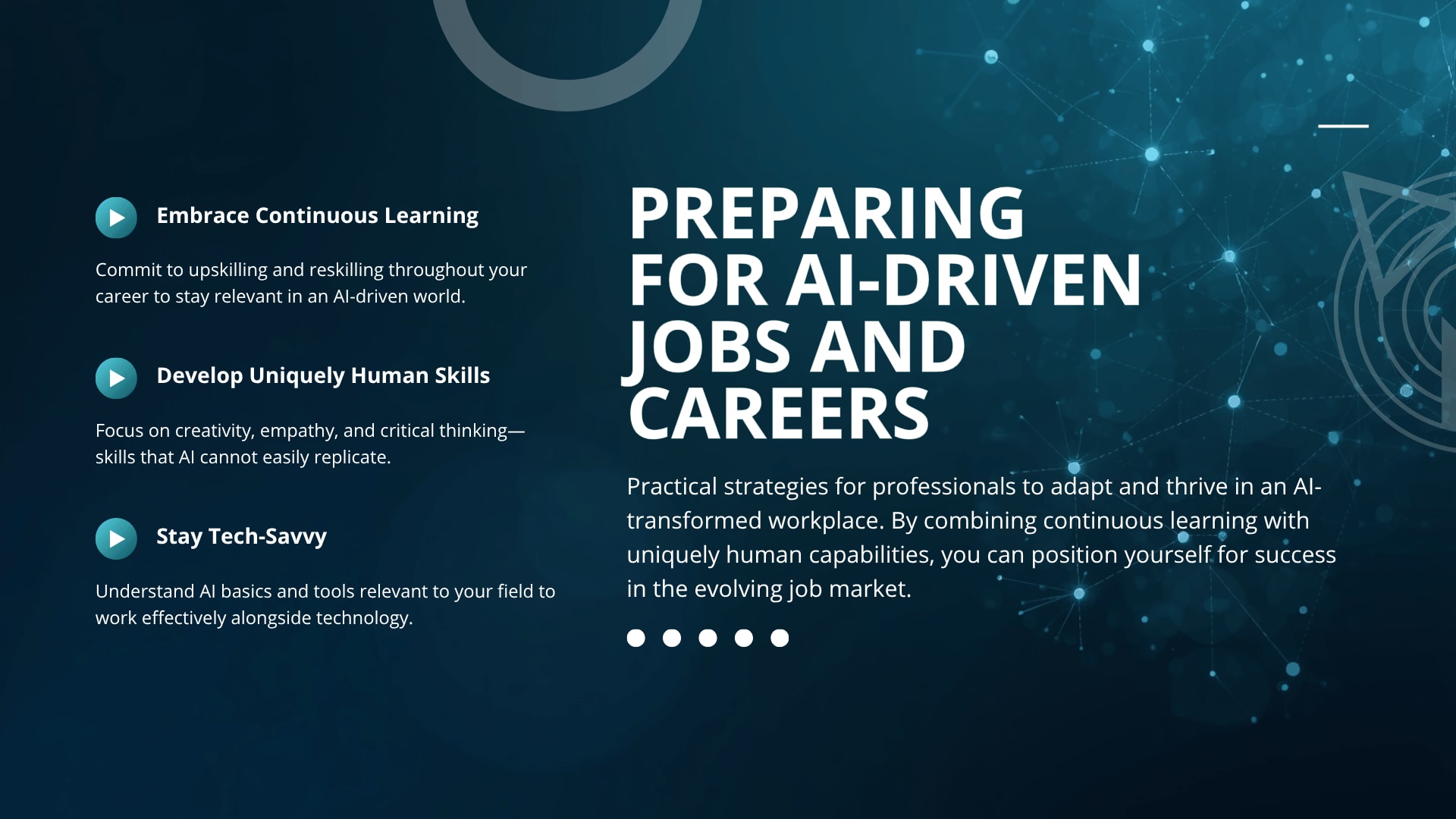
Professionals can prepare for AI-driven jobs and careers by developing technical literacy, improving problem-solving abilities, strengthening communication skills, and continuously learning emerging digital technologies. AI-powered careers increasingly reward adaptability, creativity, and the ability to work effectively alongside intelligent systems.
Preparation no longer applies only to technology professionals. Employees across healthcare, education, finance, marketing, and operations now benefit from AI knowledge.
Organizations increasingly prioritize candidates who demonstrate both technical awareness and human-centered leadership capabilities.
What skills are essential for succeeding in AI-powered careers?
Success in AI-powered careers requires a balance of technical knowledge, analytical thinking, creativity, communication, and adaptability. Professionals who can combine AI tools with strategic human decision-making are becoming highly valuable in modern workplaces.
The most successful employees are not necessarily AI engineers. Instead, they are professionals who understand how to use artificial intelligence effectively within their industries.
Why are critical thinking and creativity still important in the age of AI?
Critical thinking and creativity remain essential because AI systems still depend on human judgment, innovation, ethical oversight, and strategic direction.
AI can process data quickly, but it cannot fully replicate:
Emotional intelligence
Complex ethical reasoning
Creative storytelling
Human empathy
Cultural understanding
Strategic leadership
For example, an AI tool may generate marketing ideas, but creative professionals still decide which message best connects emotionally with audiences.
Employers increasingly value professionals who can interpret AI-generated insights thoughtfully rather than blindly relying on automation.
How valuable are data analysis and machine learning skills today?
Data analysis and machine learning skills are among the most valuable capabilities in today’s digital economy.
Businesses rely heavily on data-driven decision-making for:
Customer insights
Market forecasting
Operational optimization
Fraud prevention
Product development
Professionals with analytics knowledge often gain strong career advantages, even in non-technical industries.
Core in-demand technical skills include:
Data visualization
SQL and database management
Python programming
Machine learning fundamentals
AI workflow automation
Cloud computing basics
Even managers and business leaders increasingly benefit from understanding AI and analytics concepts.
Which soft skills help employees stay competitive alongside AI?
Soft skills are becoming even more valuable as automation handles routine tasks.
The most important soft skills include:
Adaptability
Emotional intelligence
Collaboration
Leadership
Communication
Problem-solving
Negotiation
Creativity
As AI handles repetitive operational work, employees increasingly focus on relationship-building, innovation, and strategic thinking.
Human interaction remains essential in leadership, customer experience, healthcare, and education.
How can communication and leadership improve career growth in AI workplaces?
Strong communication and leadership skills help professionals explain AI insights, guide teams through digital transformation, and manage workplace change effectively.
Companies increasingly need leaders who can:
Translate technical insights into business decisions
Help employees adapt to AI systems
Build trust around automation initiatives
Encourage collaboration between humans and AI tools
Drive innovation without creating fear among workers
Professionals who combine technical awareness with leadership capabilities often advance faster into management positions.
How can students prepare for careers influenced by AI?
Students can prepare for AI-influenced careers by learning digital skills early, exploring AI fundamentals, building analytical thinking abilities, and gaining practical experience through projects, internships, and certifications.
AI career transformation is already influencing educational priorities worldwide.
Schools and universities increasingly encourage students to develop interdisciplinary skills that combine technology with communication, creativity, and business understanding.
What are the best AI courses and certifications for students?
Students benefit most from practical, industry-relevant AI training programs.
Popular learning areas include:
Artificial intelligence fundamentals
Machine learning basics
Data analytics
Cloud computing
Python programming
Cybersecurity
Prompt engineering
Business intelligence
Online learning platforms like JioSkill are helping students access future-ready AI certification courses and digital career training programs aligned with industry demands.
Hands-on projects and portfolio-building exercises are particularly valuable for early career growth.
Which college degrees are most relevant for AI careers?
Several academic degrees support long-term success in AI-powered careers.
Common degree paths include:
Computer science
Data science
Information technology
Artificial intelligence engineering
Mathematics
Statistics
Robotics
Software engineering
However, AI skills demand is expanding beyond technical disciplines.
Marketing, finance, healthcare, and business students who understand AI applications also gain significant advantages.
How early should students start learning artificial intelligence skills?
Students benefit from learning AI concepts as early as possible because digital transformation is accelerating rapidly across industries.
Early exposure helps students:
Develop technical confidence
Build future-ready skills
Understand automation trends
Improve problem-solving abilities
Explore emerging career opportunities
Even basic AI literacy can significantly improve career readiness in the future of jobs with AI.
What internship opportunities help build AI career experience?
Internships provide critical real-world exposure to AI tools and workplace applications.
Valuable internship areas include:
Data analytics
Software testing
AI research assistance
Digital marketing analytics
Business intelligence
Cloud operations
Cybersecurity monitoring
Students who gain hands-on project experience often become stronger candidates for AI-related employment opportunities.
How can working professionals transition into AI careers successfully?
Working professionals can transition into AI careers by identifying transferable skills, learning practical AI tools, gaining certifications, and gradually building industry-specific expertise through projects and online training.
Many successful AI professionals originally worked in unrelated fields such as finance, operations, education, or customer support.
Career transitions are becoming more accessible because AI adoption now affects nearly every industry.
What are the easiest ways to switch into AI-related roles?
The easiest transition path often involves combining existing industry knowledge with AI-focused skills.
For example:
A marketer can specialize in AI-driven analytics
A finance professional can learn predictive modeling
A teacher can transition into AI education technology
A customer support specialist can work with AI automation systems
This approach allows professionals to build on their existing expertise rather than starting entirely from scratch.
How can online learning platforms help professionals upskill in AI?
AI learning platforms provide flexible, affordable access to industry-relevant training and certifications.
Benefits include:
Self-paced learning
Practical assignments
Industry-recognized certifications
Career-focused training pathways
Portfolio development opportunities
Platforms such as JioSkill support professionals seeking future-ready digital skills, AI certification programs, and career advancement opportunities.
Continuous upskilling is becoming essential in rapidly evolving digital careers.
What certifications can boost career opportunities in AI?
Several certifications help professionals improve credibility and employability.
Popular certification areas include:
Machine learning
Data science
Cloud computing
AI ethics
Business analytics
Cybersecurity
Automation platforms
Employers increasingly value candidates who demonstrate practical technical competence alongside traditional work experience.
How important is networking for AI career advancement?
Networking plays a major role in AI career growth because many opportunities emerge through industry communities, professional referrals, and collaborative learning environments.
Professionals can build networks through:
LinkedIn communities
AI conferences
Online forums
Hackathons
Professional training programs
Industry webinars
Networking also helps individuals stay updated on AI workforce trends and emerging job opportunities.
How are companies training employees for AI-powered workplaces?
Companies are training employees for AI-powered workplaces through internal upskilling programs, AI literacy initiatives, digital learning platforms, and hands-on automation training. Businesses recognize that workforce development is essential for successful AI adoption.
Organizations that invest in employee training often experience smoother digital transformation and higher productivity gains.
What role does corporate AI training play in workforce development?
Corporate AI training helps employees understand automation tools, adapt to evolving workflows, and improve digital productivity.
Effective workforce training programs typically include:
AI literacy education
Data analysis fundamentals
Automation workflow training
Cybersecurity awareness
Responsible AI usage guidelines
Digital collaboration tools
Companies increasingly view continuous learning as a long-term strategic investment.
How are employers balancing automation with human talent?
Successful organizations balance automation with human expertise by using AI to support employees rather than replace them entirely.
For example:
AI handles repetitive scheduling tasks
Human managers focus on team leadership
AI analyzes customer data
Human professionals manage relationships and strategy
This hybrid workforce model improves both efficiency and employee satisfaction.
Why are companies investing in AI literacy programs?
Companies invest in AI literacy because employees across departments now interact with intelligent systems regularly.
AI literacy programs help workers:
Understand automation tools
Reduce fear around AI adoption
Improve workplace productivity
Strengthen digital confidence
Support innovation initiatives
Organizations with AI-aware employees often adapt faster to technological change.
What challenges do organizations face while implementing AI in careers?
Common AI implementation challenges include:
Employee resistance to change
Skill gaps
Data privacy concerns
Ethical issues
High implementation costs
Integration difficulties
Businesses must manage both technological and human challenges carefully during AI transformation initiatives.
What Is the Future of AI in Jobs and Careers Over the Next Decade?
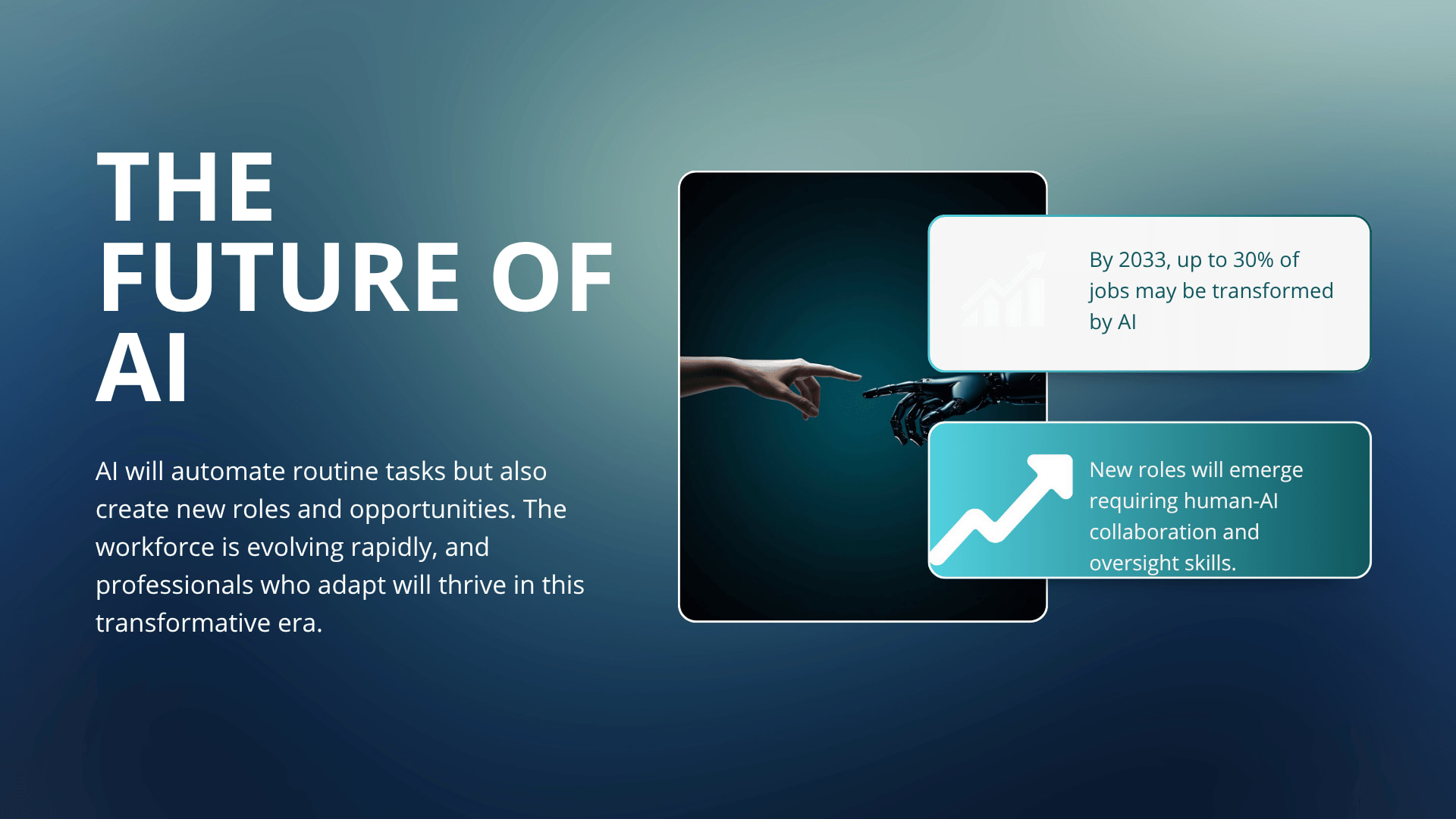
The future of AI in jobs and careers will involve deeper human-AI collaboration, expanded automation, global remote work growth, and the creation of entirely new digital professions. By 2030, AI-powered careers are expected to become a standard part of most industries rather than a specialized niche.
Organizations worldwide are redesigning workforce strategies around automation, analytics, and intelligent systems.
At the same time, professionals are increasingly focusing on adaptability, continuous learning, and hybrid technical-human skill development.
How will AI shape the future of work by 2030?
AI will shape the future of work by automating repetitive tasks, enhancing decision-making, expanding remote collaboration, and creating new categories of employment centered around intelligent technologies.
The future workplace will likely combine:
AI automation systems
Human creativity and leadership
Data-driven workflows
Flexible remote collaboration
Personalized digital learning
Professionals who adapt early may benefit significantly from these changes.
What future careers will emerge because of artificial intelligence?
Several entirely new careers are already emerging due to AI expansion.
Examples include:
AI ethics consultant
Prompt engineer
Human-AI collaboration specialist
AI governance manager
AI compliance auditor
Synthetic media strategist
AI workflow designer
As AI technologies evolve, additional specialized career paths will continue developing.
Will hybrid human-AI collaboration become the new workplace standard?
Yes, hybrid human-AI collaboration is expected to become the standard workplace model across many industries.
In this model:
AI handles repetitive analysis
Humans provide strategic oversight
AI improves operational efficiency
Humans manage emotional intelligence and creativity
This collaborative approach often produces better outcomes than relying entirely on either humans or automation alone.
How will AI redefine remote work and global hiring trends?
AI is making remote work more efficient through automated communication, virtual collaboration tools, intelligent scheduling, and multilingual support systems.
Global hiring trends are also changing because businesses can now recruit skilled professionals from anywhere.
This shift is increasing international competition while expanding career opportunities for remote workers worldwide.
What technologies will drive the next wave of AI career innovation?
Several emerging technologies will shape future AI workforce trends.
Key technologies include:
Generative AI
Robotics automation
Quantum computing
Advanced cybersecurity AI
Predictive analytics
Digital twins
Autonomous systems
AI-powered cloud infrastructure
These innovations will continue reshaping digital careers and workforce expectations.
What ethical concerns surround AI in jobs and careers?
Ethical concerns around AI in jobs and careers include hiring bias, workplace surveillance, privacy risks, unfair automation practices, and accountability challenges. Businesses must balance innovation with responsible AI governance to maintain trust and fairness.
As artificial intelligence in workplaces expands, ethical workforce management is becoming increasingly important.
Can AI hiring systems create bias in recruitment?
Yes, AI hiring systems can unintentionally reinforce bias if trained on flawed or unbalanced historical data.
Potential issues include:
Gender bias
Racial discrimination
Unfair resume filtering
Limited diversity representation
Organizations must regularly audit AI recruitment systems to ensure fairness and transparency.
How can companies use AI ethically in workforce management?
Ethical AI implementation requires clear policies, transparency, human oversight, and accountability.
Responsible companies typically:
Monitor AI decision-making systems
Protect employee privacy
Maintain human review processes
Ensure fairness in recruitment
Provide transparency around automation use
Ethical governance is becoming a competitive advantage for many organizations.
What privacy concerns exist in AI-powered workplaces?
AI workplace systems often collect large amounts of employee data, creating privacy concerns related to monitoring, surveillance, and data security.
Examples include:
Productivity tracking software
Behavioral analytics systems
Biometric authentication tools
AI-based communication monitoring
Employees increasingly expect transparency regarding how workplace data is collected and used.
Should governments regulate AI and automation in employment?
Many experts believe governments should establish balanced AI regulations to protect workers while encouraging innovation.
Potential regulatory priorities include:
Worker protection policies
Data privacy standards
Fair hiring practices
Automation accountability
AI transparency requirements
Regulation will likely play a growing role in the future of jobs with AI.
How are businesses benefiting from AI-powered workforce transformation?
Businesses benefit from AI-powered workforce transformation through improved productivity, smarter recruitment, enhanced employee engagement, faster decision-making, and reduced operational costs. AI systems help organizations become more agile, scalable, and competitive.
Companies using AI strategically often experience stronger long-term growth.
How does AI improve recruitment and talent acquisition?
AI recruitment systems improve hiring by analyzing resumes faster, identifying qualified candidates, and reducing manual administrative work.
AI hiring tools commonly support:
Resume screening
Candidate matching
Interview scheduling
Recruitment analytics
Talent forecasting
This allows HR teams to focus more on relationship-building and candidate experience.
What role does AI play in employee engagement and retention?
AI tools help organizations improve employee satisfaction through personalized learning, career development recommendations, and workforce analytics.
Businesses use AI to:
Monitor employee engagement trends
Predict burnout risks
Recommend training opportunities
Personalize career pathways
These insights help companies retain valuable talent more effectively.
How are AI tools improving workplace decision-making?
AI systems improve decision-making by processing large datasets quickly and identifying patterns humans may overlook.
Examples include:
Predictive business analytics
Customer behavior forecasting
Operational risk analysis
Workforce planning insights
Leaders increasingly rely on AI-generated insights to support strategic planning.
Why are startups investing heavily in AI-driven career solutions?
Startups are investing in AI-driven career solutions because workforce automation and digital employment services represent rapidly growing markets.
Popular startup focus areas include:
AI recruitment platforms
Career coaching applications
Employee analytics systems
Skills assessment tools
AI learning platforms
The demand for scalable workforce technology continues increasing globally.
What are the biggest myths and misconceptions about AI and careers?
Many misconceptions about AI in jobs and careers exaggerate automation risks or misunderstand how AI actually functions in workplaces. In reality, AI usually changes tasks within jobs rather than eliminating entire professions overnight.
Understanding realistic AI workforce trends helps professionals make better career decisions.
Will AI completely replace human workers in the future?
No, AI is unlikely to replace all human workers completely.
Most industries still require:
Human judgment
Creativity
Leadership
Emotional intelligence
Relationship management
AI is more likely to augment human capabilities than fully eliminate workers.
Is AI only beneficial for tech professionals?
AI benefits professionals across nearly every industry, not just technology workers.
Non-technical fields using AI include:
Healthcare
Education
Retail
Marketing
Human resources
Finance
Manufacturing
AI literacy is becoming broadly valuable regardless of profession.
Can small businesses benefit from AI in jobs and careers?
Yes, small businesses increasingly benefit from affordable AI tools that improve efficiency and reduce operational costs.
Small companies now use AI for:
Customer support automation
Marketing optimization
Sales forecasting
Inventory management
Scheduling assistance
AI adoption is no longer limited to large corporations.
What should professionals realistically expect from AI-driven workplaces?
Professionals should expect ongoing workplace evolution rather than sudden replacement.
Future workplaces will likely involve:
More digital collaboration
Increased automation support
Continuous learning requirements
Faster technology adoption
Greater emphasis on adaptability
Employees who remain flexible and proactive may benefit most from AI transformation.
What practical steps can individuals take to future-proof their careers against AI?
Individuals can future-proof their careers by continuously learning, developing adaptable skills, building professional networks, strengthening personal brands, and embracing technology-driven change. Career resilience increasingly depends on long-term learning habits and digital readiness.
Professionals who stay proactive often adapt more successfully to AI workforce trends.
How can continuous learning help professionals stay relevant?
Continuous learning helps professionals keep pace with changing technologies, industry expectations, and digital workplace tools.
Important learning strategies include:
Taking AI certification courses
Following industry trends
Practicing digital skills regularly
Building project portfolios
Learning emerging technologies
Ongoing education is becoming essential for long-term career security.
Why is personal branding important in AI-powered industries?
Personal branding helps professionals stand out in increasingly competitive digital job markets.
Strong personal branding can include:
LinkedIn thought leadership
Industry content creation
Portfolio development
Professional networking
Public speaking and webinars
Visible expertise often improves career opportunities significantly.
How can freelancers and entrepreneurs leverage AI for career growth?
Freelancers and entrepreneurs use AI to improve productivity, automate operations, and scale business growth.
Popular AI business applications include:
Content generation
Customer support automation
Market analysis
Workflow management
Financial forecasting
AI tools allow independent professionals to compete more efficiently in digital markets.
What daily habits help professionals succeed in an AI-driven future?
Successful professionals often develop habits focused on adaptability and continuous improvement.
Helpful daily habits include:
Reading industry updates
Practicing digital tools
Building communication skills
Experimenting with AI technologies
Expanding professional networks
Maintaining curiosity and flexibility
Consistent small improvements often create long-term career advantages.
Conclusion
AI in jobs and careers is reshaping the global workforce faster than many professionals expected. Artificial intelligence in workplaces is influencing hiring, productivity, collaboration, training, customer service, and long-term career planning across nearly every industry.
Although automation creates uncertainty for some traditional roles, it also opens massive opportunities for professionals willing to adapt. AI-powered careers are expanding in healthcare, finance, education, cybersecurity, marketing, manufacturing, and technology sectors. At the same time, human-centered skills such as creativity, leadership, emotional intelligence, and strategic thinking remain critically important.
The future of jobs with AI will likely belong to professionals who combine technical awareness with adaptability and lifelong learning.
Key takeaways include:
AI is transforming jobs rather than eliminating all human work
Digital skills and AI literacy are becoming essential
Human creativity and communication remain highly valuable
Remote AI job opportunities are growing globally
Continuous upskilling improves long-term career security
Businesses increasingly invest in AI workforce transformation
Ethical AI implementation will become more important over time
Professionals, students, freelancers, and organizations that embrace AI career transformation proactively may gain significant long-term advantages in the evolving digital economy.
Platforms like JioSkill can help individuals develop future-ready digital skills, explore AI learning pathways, and prepare for evolving career opportunities in an increasingly AI-powered world.
FAQs About AI in Jobs and Careers
1. What is AI in jobs and careers?
AI in jobs and careers refers to the use of artificial intelligence technologies to automate tasks, improve workplace productivity, support decision-making, and create new career opportunities across industries.
2. Which industries are most affected by AI workforce trends?
Healthcare, finance, marketing, manufacturing, logistics, customer support, and technology industries are experiencing major AI-driven transformation.
3. Are AI-powered careers only for programmers and engineers?
No. AI-powered careers now exist in marketing, healthcare, education, finance, HR, operations, customer support, and many other industries.
4. What skills are most important for future AI careers?
Important skills include data analysis, adaptability, communication, creativity, problem-solving, machine learning fundamentals, and digital literacy.
5. Can AI create new job opportunities?
Yes. AI is creating new careers in machine learning, AI ethics, automation consulting, prompt engineering, cybersecurity, and digital transformation management.
6. How can beginners start preparing for AI-related jobs?
Beginners can start by learning AI fundamentals, taking online certification courses, practicing digital tools, and building practical project experience.
7. Will AI completely replace traditional jobs?
AI may automate repetitive tasks, but most careers will evolve rather than disappear completely. Human creativity, leadership, and emotional intelligence remain highly valuable.
8. How can professionals stay relevant in AI-driven workplaces?
Professionals can stay relevant through continuous learning, digital upskilling, networking, AI literacy development, and adaptability to technological change.
JioSkill Team
Content Creator
Content creator at JioSkill