

Data Analytics Career Roadmap 2025: Skills, Tools & Growth Path , If there’s one career that’s absolutely exploding right now, it’s the data analytics career path. I’m not exaggerating when I say that nearly every company—whether it’s a scrappy startup or a Fortune 500 giant—is scrambling to hire people who can actually make sense of their data. And honestly? It makes sense. We’re drowning in information these days, and businesses need folks who can fish out the insights that actually matter.

So if you’ve been wondering how to become a data analyst, or maybe you’re just curious about what the data analytics learning path looks like, you’ve landed in the right spot. This data analytics career guide is going to walk you through everything—the data analytics skills required, the data analytics tools list worth mastering, and a realistic data analyst roadmap 2025 to get you from “I don’t know where to start” to “I’m ready to land my first job.”
Whether you’re fresh out of college or thinking about switching careers, let’s figure out how you can build something real in a career in data analytics.
1. Understanding the Data Analytics Career Path
Here’s the thing about the data analytics career path: it’s not just one job. It’s more like a ladder with different rungs, and you can climb it at your own pace.
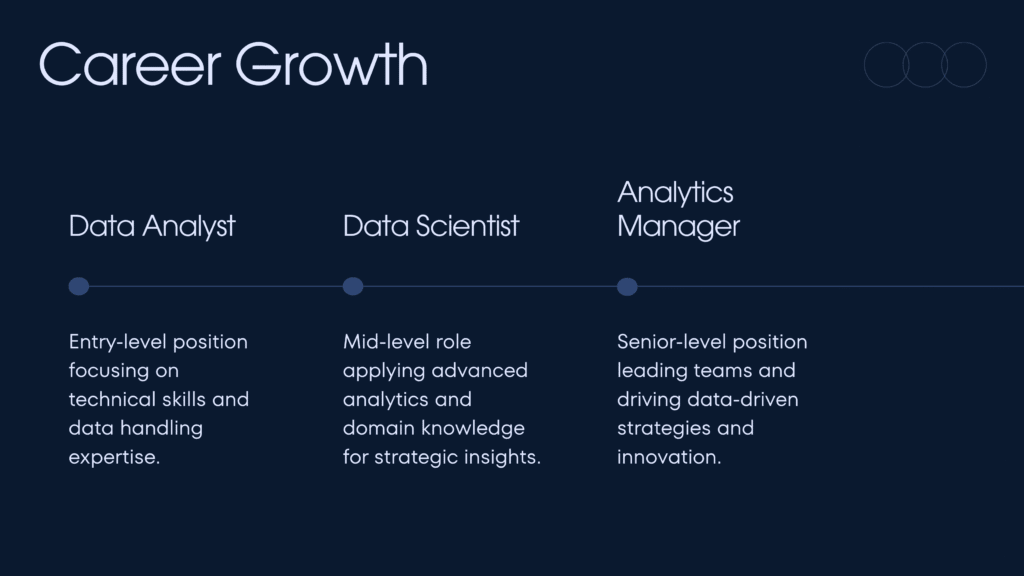
Most people start as a Data Analyst—you’re basically the person digging through spreadsheets, cleaning up messy data, and turning numbers into reports that people can actually understand. From there, you might become a Business Analyst, where you’re using those same skills but with more focus on solving business problems and improving processes.
If you get really into the technical side, you could level up to Data Scientist, working with machine learning models and predictive analytics. Or maybe you prefer the leadership route and end up as an Analytics Manager or even a Director, where you’re steering strategy and managing teams.
The beauty of this field? With the right data analytics skills required and a good amount of hustle, you can realistically move from entry-level to senior positions within 3 to 5 years. Not many careers offer that kind of trajectory anymore.
2. Why Choose a Career in Data Analytics in 2025?
Let me throw some numbers at you. Every single day, we’re creating over 328 million terabytes of data worldwide. That’s… well, that’s an absurd amount. And companies have no clue what to do with most of it unless they have someone who knows how to analyze it.
LinkedIn keeps listing “Data Analyst” as one of the top 5 most wanted jobs globally, and for good reason. Here’s why jumping into a career in data analytics makes a ton of sense:
The demand is real. Finance, healthcare, retail, tech—everyone needs data people. It’s not a niche skill anymore; it’s foundational.
The money’s good. In India, you’re looking at anywhere from ₹6 to 10 lakhs per year when you’re starting out. Get a few years under your belt, and senior analysts are pulling in ₹15 to 25 lakhs—sometimes more.
You can work anywhere. These skills translate across borders. Companies in the US, Europe, Asia—they all need the same thing. Data doesn’t care about geography.
You won’t get stuck. There’s a clear path forward. You can go deeper into the technical side, move into business strategy, specialize in a particular industry—the options are there.
Bottom line? If you’re looking for something stable, well-paid, and future-proof, a career in data analytics checks all those boxes.
3. Data Analyst Roadmap 2025: Step-by-Step Guide
Alright, let’s get practical. If you’re wondering how to start a career in data analytics in 2025, here’s the step-by-step data analyst roadmap I’d recommend:
Step 1: Get Comfortable with the Basics
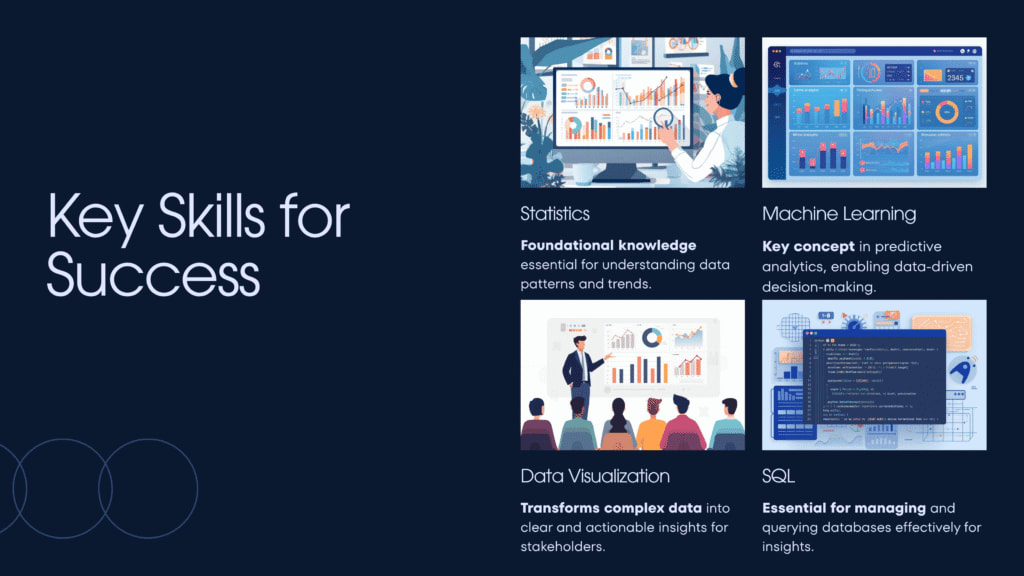
Before you touch anything fancy, you need to understand what data actually is. Learn about different data types, basic statistics, probability—the foundational stuff. This is crucial for anyone following a data analytics roadmap for beginners. Start simple with Excel or Google Sheets. Then pick up SQL, because that’s how you’ll talk to databases.
Step 2: Master the Core Tools (Data Analytics Tools List)
This is where you start building real skills. You’ll want to get familiar with the best tools to learn for data analytics:
- Excel and Google Sheets for cleaning data and basic analysis
- SQL for pulling information from databases (every company uses this)
- Python or R for more advanced analysis and automation
- Tableau or Power BI for creating dashboards and visual reports
These aren’t just random tools—they’re the essential data analytics tools list that actual companies use every day.
Step 3: Learn to Tell Stories with Data | Data Analytics Career Roadmap
Raw numbers don’t mean anything to most people. You need to learn how to visualize trends, create dashboards, and basically translate data into something decision-makers can actually use. This is honestly one of the most valuable skills you can develop.
Step 4: Get Your Hands Dirty
Theory only gets you so far. Download datasets from Kaggle, take on freelance projects, or find an internship. Build things. Make mistakes. Figure out what you’re doing. If you’re learning how to learn data analytics from scratch, this hands-on experience is absolutely critical. Create a portfolio—GitHub works great for this—so you have something to show potential employers.
Step 5: Consider a Structured Data Analyst Course Roadmap
While you can learn a lot on your own, a proper data analyst course roadmap can speed things up and fill in the gaps. Some solid options for the best online courses for data analytics in 2025 include:
- Google Data Analytics Professional Certificate
- IBM Data Analyst Professional Certificate
- Coursera’s Data Analytics Specialization
- Excel to MySQL by Duke University
These programs give you a roadmap and some structure, which helps when you’re juggling learning with everything else in life.
4. What Skills Are Needed for a Career in Data Analytics
Let’s break down the data analytics skills required into what you actually need to know.
On the technical side:
You’ll need SQL to query databases—there’s no way around this one. Python or R will help you automate tasks and do more complex analysis. Excel might seem basic, but you’d be surprised how much companies still rely on it. Tableau and Power BI are your go-to tools for visualization. A solid grasp of statistics and probability is crucial for understanding what your data is actually telling you. And if you can pick up some machine learning basics, even better—it’s becoming more relevant every year.
But don’t sleep on the soft skills:
Being able to solve problems creatively matters. So does communication—you need to explain complex stuff to people who don’t know (or care) about the technical details. Critical thinking helps you ask the right questions. And having some business sense? That’s what separates analysts who just crunch numbers from those who actually drive impact.
The combination of technical chops and people skills is what’ll really set you apart when building your data analytics career path.
5. Best Tools to Learn for Data Analytics (Complete List)
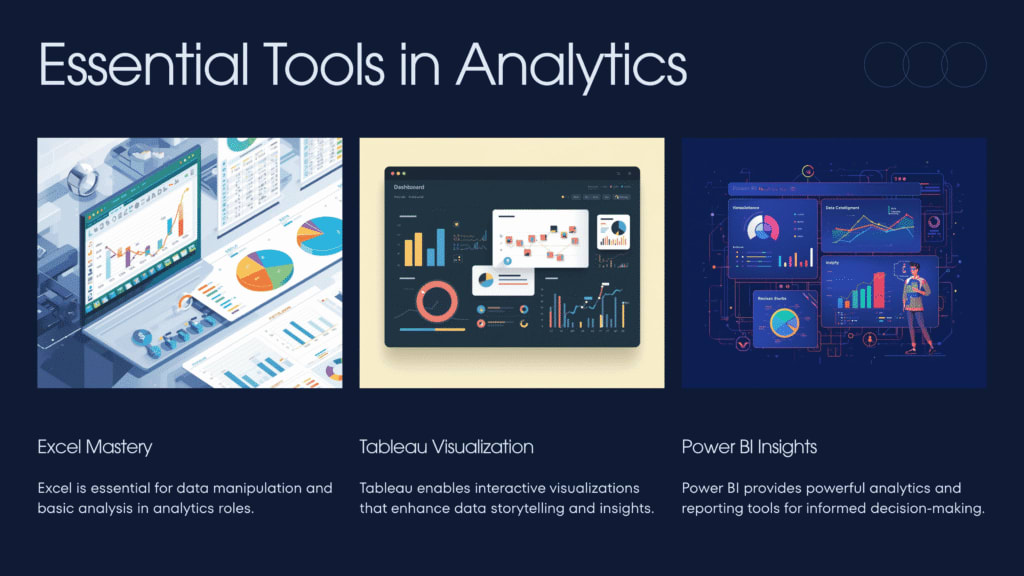
Here’s a comprehensive data analytics tools list broken down by category for 2025:
For cleaning data: Excel, OpenRefine, Python (specifically the Pandas library)
For visualization: Tableau, Power BI, Looker
For programming: Python, R
For databases: MySQL, PostgreSQL, BigQuery
For statistical work: SAS, SPSS
Cloud platforms: AWS, Google Cloud, Azure
You don’t need to master all of these right away. Start with the essentials (Excel, SQL, Python, and one visualization tool), then branch out as you figure out what type of work you enjoy. This approach works perfectly for a data analytics roadmap for beginners.
6. Beginner to Expert Data Analytics Roadmap
Your data analytics learning path should probably look something like this:
Beginner phase: Master Excel, wrap your head around basic statistics, and get comfortable with SQL. This might take you 2-3 months if you’re consistent.
Intermediate phase: Dive into Python or R. Learn one solid visualization tool—I’d suggest Tableau or Power BI. Start working on small projects. This phase might stretch across 4-6 months.
Advanced phase: Take on end-to-end projects where you handle everything from data collection to final presentation. Learn cloud tools and dip your toes into machine learning. Another 6 months or so.
Expert level: By now you should be specializing. Pick an industry (finance, marketing, healthcare—whatever interests you) and become the go-to person for that kind of analysis. Lead projects. Mentor others.
This beginner to expert data analytics roadmap isn’t a race. Some people move faster, others take their time. What matters is steady progress on your data analytics career path.
7. How to Learn Data Analytics from Scratch
Starting from zero can feel overwhelming, but here’s a realistic approach for how to learn data analytics from scratch:
Begin with free resources. YouTube has thousands of good tutorials. Coursera offers intro courses that don’t cost anything. Just start somewhere—this is the first step in any solid data analytics roadmap for beginners.
Practice every single day, even if it’s only for 30 minutes or an hour. Grab datasets from Kaggle and mess around with them. The more you practice, the faster things will click.
If you can find a mentor or get into an internship program, do it. Learning from someone who’s already done it is invaluable.
Build real projects. Analyze something interesting to you—maybe track COVID data, study e-commerce trends, or break down marketing campaign results. Put these projects on your resume and LinkedIn.
The key is consistency over intensity. An hour a day beats a 10-hour weekend binge every single time when you’re figuring out how to become a data analyst.
8. Data Analytics Career Growth and Salary in India
The numbers here are pretty encouraging. Data analyst demand in India has jumped by over 45% year-over-year since 2023, and salaries have climbed along with it. Understanding data analytics career growth and salary potential is crucial when planning your path.
Here’s what you can realistically expect for data analytics career opportunities in India in 2025:
Data Analyst (0-2 years experience): ₹5-8 lakhs per year
Senior Analyst (3-5 years): ₹10-15 lakhs per year
Data Scientist (5-8 years): ₹15-25 lakhs per year
Analytics Manager (8+ years): ₹25-40 lakhs per year
Obviously these vary by company, location, and your specific skills. But the trajectory is solid, and there’s real room to grow your income as you gain experience in your career in data analytics.
9. Future Scope of Data Analytics Careers
If you’re worried about this field getting saturated or becoming obsolete, don’t be. The opposite is happening. The future scope of data analytics careers is genuinely massive.
AI and machine learning aren’t replacing data analysts—they’re creating more opportunities. We’re seeing brand new roles pop up like Data Product Manager, Business Intelligence Developer, Machine Learning Analyst, and Data Consultant. Companies are building entire teams around data that didn’t exist five years ago.
The reality is that as technology evolves, we’re generating more data, not less. And that data becomes more complex, not simpler. There will always be a need for people who can cut through the noise and find the signal.
If anything, getting in now positions you perfectly for where the industry is headed. The future scope of data analytics careers extends far beyond what we can even predict today.
10. Best Online Courses for Data Analytics in 2025
If you prefer structured learning (and honestly, most people do), here are the best online courses for data analytics in 2025 worth checking out:
- Google Data Analytics Professional Certificate on Coursera—probably the most popular starting point right now
- IBM Data Analyst Professional Certificate on Coursera—solid alternative with good hands-on projects
- Excel to MySQL by Duke University—great if you want to nail the fundamentals
- The Data Analyst Bootcamp on Udemy—comprehensive and usually affordable
- Simplilearn’s Post Graduate Program in Data Analytics—more intensive, good if you’re serious about switching careers
Each of these covers the core data analyst roadmap 2025 and can get you from beginner to job-ready. Pick one that fits your schedule and budget, then commit to finishing it as part of your data analyst course roadmap.
11. Data Analytics Career Opportunities in India
India’s analytics market is massive—we’re talking over $50 billion by 2025. And the hiring is spread across pretty much every major industry. The data analytics career opportunities in India are expanding at an incredible rate.
You’ll find opportunities in IT and software companies (obviously), but also in e-commerce, banking and finance, healthcare, and marketing. Big employers include TCS, Accenture, Amazon, Flipkart, Deloitte, and Infosys, but there are hundreds of smaller companies hiring too.
If you’re in India, the major tech hubs—Bengaluru, Pune, Hyderabad, Gurugram—are where most of the jobs are. But remote work has opened things up, so you’re not necessarily limited by location anymore when pursuing data analytics career opportunities in India.
12. Step-by-Step Data Analyst Roadmap (Recap)
Let me sum up this entire data analytics career guide with a quick step-by-step data analyst roadmap:
- Learn the basics: Start with Excel and fundamental statistics
- Master the tools: Get good at SQL, Python, and Tableau (follow the data analytics tools list above)
- Build real projects: Work with actual data and solve real problems
- Take a structured course: Fill in gaps with a proper data analyst course roadmap
- Get certified and start applying: Put yourself out there
- Keep learning: Technology changes fast—stay current
Follow this data analyst roadmap 2025, and you can realistically be job-ready within 6 to 12 months. Maybe faster if you’re really dedicated, or a bit longer if you’re juggling other commitments. The timeline matters less than the direction.
Conclusion
Look, the data analytics career path isn’t just a trendy career choice—it’s one of the smartest moves you can make right now. The demand is real, the pay is solid, and the growth potential is massive. Whether you’re a student trying to figure out what to do with your degree, a professional looking to switch careers, or someone who just wants to future-proof their skillset, this data analytics roadmap for beginners works.
The hardest part is just starting. Pick one thing—maybe it’s an Excel tutorial or a free SQL course—and do it today. Don’t overthink it. Learning how to become a data analyst isn’t some mystical skill reserved for math geniuses. It’s learnable, practical, and honestly? Pretty fascinating once you get into it.
The future speaks data. Might as well learn the language and build a successful career in data analytics.
FAQs
1. What skills are needed for a career in data analytics?
The essential data analytics skills required include Excel, SQL, and Python. Add Tableau or Power BI for visualization, and make sure you understand basic statistics. But honestly, problem-solving and communication skills are just as important as the technical stuff when building your data analytics career path.
2. How to start a career in data analytics in 2025?
To start a career in data analytics in 2025, begin with the basics—learn Excel and SQL through free online resources. Take a structured data analyst course roadmap to build a foundation. Practice with real datasets from sites like Kaggle. Build a portfolio of projects you can show employers. Follow the step-by-step data analyst roadmap outlined in this guide, and you’ll be job-ready within 6-12 months.
3. What are the best tools to learn for data analytics?
The best tools to learn for data analytics are Python, SQL, Excel, and either Tableau or Power BI. These four will cover 90% of what you need. This core data analytics tools list forms the foundation of any solid data analytics learning path. You can always add more specialized tools later as you figure out what type of work you enjoy.
4. What is the future scope of data analytics careers?
The future scope of data analytics careers is expanding rapidly. Every industry is becoming more data-driven, and AI is creating new roles rather than eliminating them. You’ll see data analytics career opportunities in India and globally in everything from finance to healthcare to marketing. The field isn’t going anywhere—if anything, it’s just getting started. Following a beginner to expert data analytics roadmap now positions you perfectly for long-term success.
JioSkill Team
Content Creator
Content creator at JioSkill