
How to Become a Data Scientist in 2025 Step-by-Step Guide , You’ve probably heard it everywhere by now. Data science is the “sexiest job of the century,” companies can’t hire data scientists fast enough, and the salaries? Absolutely insane. But then you actually try to figure out how to break into this field, and suddenly you’re drowning in information.
Should you learn Python first or statistics? Do you actually need a master’s degree? What the hell does a data scientist even do all day?
Look, I get it. The confusion is real. That’s why I’m breaking everything down for you here—no fluff, no corporate jargon, just the actual path you need to follow. Think of this as the guide I wish someone had given me when I was starting out Data Scientist in 2025 .
First Things First: What Even Is Data Science?
At its core, data science is about making sense of massive amounts of information and turning it into something useful. Companies collect tons of data but have no clue what to do with it. That’s where you come in. You’re basically a detective mixed with a fortune teller mixed with a storyteller.
Want to predict which customers are about to cancel their subscriptions? That’s data science. Trying to figure out why your app crashes more on Tuesdays? Data science again. Even those eerily accurate Netflix recommendations? Yep, data scientists built that.
Here’s why everyone and their mother wants to hire data scientists right now Data Scientist in 2025 :

We’re drowning in data. By 2025, we’re talking about 180 zettabytes of data floating around. That number is so big it’s basically meaningless, but trust me—it’s a lot.
AI is everywhere, but it’s not magic. Sure, ChatGPT is cool, but someone needs to feed it the right data, interpret what it spits out, and make sure it’s not going completely off the rails. That someone is a data scientist.
Every single industry needs this. I’m not kidding. Banks, hospitals, online stores, sports teams, government agencies—everyone’s looking for people who can make sense of their data Data Scientist in 2025 .
The Career Path (What You’re Actually Signing Up For)
Before you dive headfirst into learning, let me paint you a picture of what this data science career path actually looks like.
Most people start as data analysts or junior data scientists. You’re basically learning the ropes, cleaning data (so much data cleaning), and maybe building some simple models. Entry-level pay in India ranges from ₹6-9 lakhs per year.
After a few years, you move into proper data scientist roles where you’re building machine learning models, working on bigger projects, and actually making decisions that matter. Now you’re looking at ₹12-18 lakhs.
Keep going, and you hit senior data scientist or machine learning engineer territory. Deep learning, natural language processing, deploying models that millions of people use. We’re talking ₹20-35 lakhs here, maybe even ₹50 lakhs+ at top companies like Google or Amazon.
Eventually, some people move into leadership—managing teams, shaping AI strategy, connecting data insights to business decisions. But that’s years down the road. Data Scientist in 2025
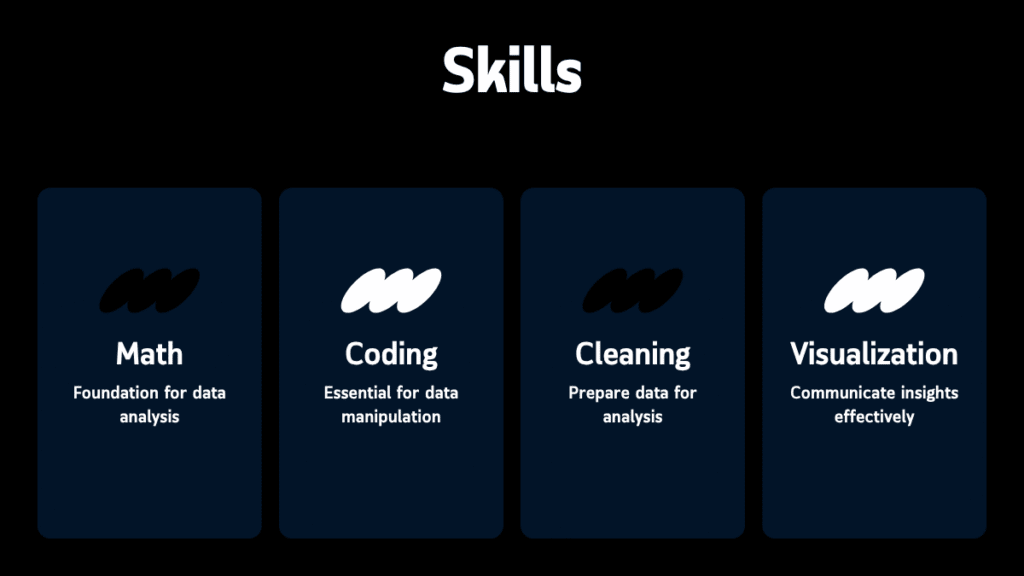
Step 1: Get Comfortable with Math (Yes, Really)
I know, I know. Nobody wants to hear this. But here’s the uncomfortable truth: if you can’t wrap your head around basic statistics and probability, you’re going to struggle. Hard.
You don’t need to be a math genius, but you should understand:
- How averages and standard deviations work
- What probability distributions mean
- The basics of linear regression
- How correlation differs from causation
- Some light linear algebra (mostly just matrix math)
Where to learn this stuff: Khan Academy is free and surprisingly good for building that foundation. There’s also a book called “Practical Statistics for Data Scientists” that cuts through the academic nonsense and gives you what you actually need.
Honestly, just practice with real scenarios. Try predicting cricket match scores using basic stats. Analyze IPL player performance in Excel. Make it fun, because if you don’t, you’ll quit.Data Scientist in 2025
Step 2: Learn to Code (Python Is Your Best Bet)
This is where things get interesting. You need to learn how to actually manipulate data using code, and in 2025, Python is still king.
Why Python? Because it’s easier to learn than most languages, and it has libraries for literally everything:
- NumPy and Pandas handle all your data manipulation
- Matplotlib and Seaborn let you create visualizations
- Scikit-learn is your go-to for machine learning
- TensorFlow and PyTorch are there when you’re ready for deep learning
Some people swear by R, especially if they come from a stats background. R is great for analysis, but Python opens more doors job-wise.
Real talk: Spend your first couple months just getting really, really good at Pandas. That’s what you’ll use every single day in actual jobs. Forget the fancy AI stuff for now—master data handling first , Data Scientist in 2025 .
Step 3: Learn to Clean Messy Data (The Unsexy Truth)
Here’s what nobody tells you about data science: you’re going to spend about 80% of your time cleaning data. Not building cool AI models. Not impressing people with predictions. Just cleaning. Endless. Cleaning.
Real-world data is a disaster. Missing values everywhere. Spelling mistakes. Duplicate entries. Data in formats that make no sense. Your job is to wrestle all of that into something usable.
You need to learn:
- How to deal with missing data (should you delete it? Fill it in? Depends on the situation)
- Converting categorical data into numbers that algorithms can understand
- Spotting and handling outliers
- Merging datasets from different sources
- Writing SQL queries to pull data from databases
Master this, and you’re already ahead of half the people calling themselves data scientists, Data Scientist in 2025 .
Step 4: Make Your Data Look Good (Visualization Matters)
Raw numbers don’t convince anyone of anything. You need to tell stories with your data, and that means visualization.
Learn tools like Matplotlib and Seaborn for Python. Pick up Tableau or Power BI if you want to create interactive dashboards. Google Data Studio is great for reports.
When you can turn a spreadsheet into a beautiful, intuitive chart that makes everyone go “Oh, NOW I get it”—that’s when you become valuable. Technical skills get you in the door, but communication skills get you promoted.
Grab some datasets from Kaggle and practice making dashboards. Post them on LinkedIn or GitHub. Show off a little, Data Scientist in 2025 .
Step 5: Dive Into Machine Learning (Finally, the Fun Stuff)
Alright, now we’re getting to the meat of data science. Machine learning is where you build models that can actually predict things based on patterns in data.
Start with the classics:
- Linear regression and logistic regression (the foundation of everything)
- Decision trees and random forests (powerful and intuitive)
- Support vector machines (great for classification)
- K-means clustering (when you need to group similar things)
- Neural networks (just the basics for now)
Don’t just copy-paste code from tutorials. Actually understand what each algorithm does, when to use it, and what its limitations are.
Kaggle competitions are perfect for practicing. Pick a beginner-friendly competition, try to build a model, fail spectacularly, learn from others’ solutions, try again. Rinse and repeat.
Step 6: Explore Deep Learning and AI (Level Up)
By 2025, if you want to stand out, you need at least some understanding of deep learning. It’s not optional anymore.
Focus on:
- Artificial neural networks (ANNs)
- Convolutional neural networks (CNNs) for image stuff
- Recurrent neural networks (RNNs) for text and time series
- Natural language processing (NLP) for anything language-related
TensorFlow, Keras, and PyTorch make this easier than ever. You don’t need a PhD to build a working neural network anymore.
Even if you don’t specialize in AI, knowing this stuff gives you a huge edge. Plus, it’s genuinely cool to build something that can recognize faces or generate text.
Step 7: Get Familiar with Big Data Tools
Traditional tools choke when you’re dealing with massive datasets. That’s where big data technologies come in.
You don’t need to be an expert, but get comfortable with:
- Apache Spark (for processing huge amounts of data)
- Basic cloud platforms like AWS, Google Cloud, or Azure
- Databricks (increasingly popular for data engineering)
Big companies use these tools constantly. Having them on your resume opens doors.
Step 8: Build Real Projects (This Is Non-Negotiable)
I cannot stress this enough: projects matter more than certificates. Way more.
Build things like:
- A house price prediction model using real estate data
- An analysis of COVID-19 trends in different regions
- A movie recommendation system
- A sentiment analysis tool for Twitter or Reddit data
- Visualizations of IPL stats or election data
Put everything on GitHub. Write up your process. Show your work publicly. When recruiters look at your portfolio, they want to see that you can actually do this stuff, not just that you took a course.
Step 9: Consider Getting Certified (But Don’t Obsess Over It)
Certificates add credibility, especially if you’re switching careers. But they’re not magic tickets to employment.
Good options for 2025:
- Google Data Analytics Certificate (great for beginners)
- IBM Data Science Professional Certificate on Coursera
- Microsoft Certified: Data Scientist Associate
- AWS Data Analytics Specialty (if you’re into cloud stuff)
These show you’ve followed a structured learning path. They help, but they won’t replace actual skills and projects.
Step 10: Build Your Brand (Yes, You Need One)
Here’s where most people drop the ball. You can be brilliant, but if nobody knows you exist, good luck getting hired.
Do this:
- Write about your projects on LinkedIn (even short posts work)
- Contribute to open-source projects on GitHub
- Join Kaggle competitions and engage with the community
- Go to meetups, webinars, hackathons
- Share what you’re learning, even the mistakes
Seriously, start posting on LinkedIn today. Document your learning journey. You’ll be shocked how many opportunities come from just being visible online.
Step 11: Start Applying for Jobs (Don’t Wait Until You’re “Ready”)
You’ll never feel completely ready. Apply anyway.
Look for positions like:
- Data analyst roles (great stepping stone)
- Junior data scientist positions
- Business intelligence internships
- ML engineering roles at startups
Check LinkedIn, Naukri, Indeed. Don’t ignore smaller companies or startups—they often give you more responsibility early on.
Even an internship gets your foot in the door and teaches you how real-world data science actually works (hint: it’s messier than tutorials suggest), Data Scientist in 2025 .
Step 12: Never Stop Learning (Seriously)
Data science changes constantly. What’s hot today might be outdated in two years.
In 2025, trends like agentic AI, AutoML, and MLOps are reshaping the field. Next year? Who knows.
Stay sharp by:
- Reading blogs like Towards Data Science and KDnuggets
- Taking short courses when new tools emerge
- Following researchers on Twitter or LinkedIn
- Participating in communities like r/datascience on Reddit
Learn something small every week. It compounds over time in ways you can’t imagine.
The Money Talk: What You’ll Actually Earn

Let’s be honest—salary is probably one of the big reasons you’re considering this career. And the pay is genuinely good.
In India for 2025 Data Scientist in 2025 :
- Entry-level (0-2 years): ₹6-9 lakhs per year
- Mid-level (3-5 years): ₹12-18 lakhs
- Senior-level (5+ years): ₹20-35 lakhs
- Top companies like Google, Amazon, Flipkart: ₹30-50 lakhs or more
Globally, average salaries hit $120,000+ per year, making it one of the best-paid analytical careers out there.
Freelancers and consultants with niche expertise (AI, NLP, computer vision) can earn even more.
Mistakes Everyone Makes (Don’t Be That Person)
Most beginners fail not because data science is impossibly hard, but because they approach it wrong.
Don’t do this:
- Jumping straight to machine learning before understanding Python or stats
- Blindly copying Kaggle notebooks without understanding why the code works
- Taking endless courses without building anything yourself
- Ignoring visualization and communication skills
- Learning in isolation without networking or sharing your work
Do this instead:
Build a solid foundation first. Work on projects constantly. Share your progress publicly. Connect with others in the field.
Think marathon, not sprint.
A Realistic 6-12 Month Roadmap
Want a practical plan? Here’s one you can follow even while studying or working full-time Data Scientist in 2025 .
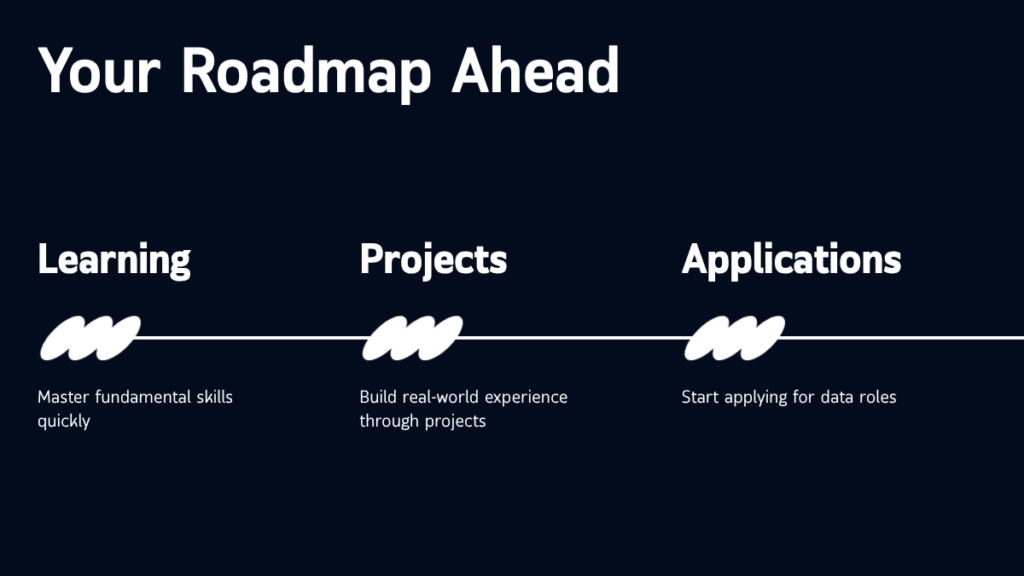
Months 1-2: Focus on statistics, Excel, and SQL basics. Get comfortable with data.
Months 3-4: Learn Python fundamentals and master Pandas. This is crucial.
Month 5: Dive into data visualization with Matplotlib and Power BI.
Months 6-7: Start machine learning with Scikit-learn. Build simple models.
Months 8-9: Explore deep learning basics with TensorFlow or Keras.
Month 10: Get familiar with big data tools like Spark or cloud platforms.
Months 11-12: Build portfolio projects, get certified, and start applying for jobs.
Stick to this consistently, and you’ll be job-ready within a year—even starting from absolute zero.
Real Story: From Mechanical Engineer to Data Scientist
Let me tell you about Ritika. She was a 26-year-old mechanical engineer in Pune who decided in 2023 she wanted to switch to data science.
She started with free statistics courses and Python basics. Then took Google’s Data Analytics Certificate. Next, she landed a 3-month internship to get real experience.
While learning, she built three solid portfolio projects and shared them regularly on LinkedIn. Within 10 months total, she landed a junior data scientist role at a fintech company earning ₹9 lakhs per year.
No fancy background. No master’s degree. Just consistent learning and putting herself out there.
If she can do it, so can you , Data Scientist in 2025 .
The Future: What’s Coming Next
The boundaries between data science, machine learning, and AI engineering are getting blurry. That’s both exciting and a little scary.
What’s trending for the next few years:
- Agentic AI and AutoML automating repetitive tasks (which means you need to focus on higher-level skills)
- MLOps becoming essential for deploying and maintaining models at scale
- AI ethics and responsible data usage becoming critical (for good reason)
- Cloud-native data systems becoming standard everywhere
The data scientists who thrive will be the ones who can do more than just crunch numbers. You’ll need to explain insights clearly, understand business context, and navigate ethical considerations.
Technical skills get you hired. Communication and business sense get you promoted.
Your Move: Start Today
Look, I’m not going to lie to you. Becoming a data scientist isn’t easy. It takes months of consistent effort. You’ll get frustrated. You’ll hit walls. You’ll wonder if you’re cut out for this.
But it’s absolutely doable Data Scientist in 2025 .
Every expert you admire once Googled “how to become a data scientist” just like you just did. The difference is they actually started.
Here’s what you do today Data Scientist in 2025 :
- Pick one concept and learn it
- Download a simple dataset from Kaggle
- Try to answer one question with that data
- Keep your curiosity alive
How to Become a Data Scientist in 2025 (Step-by-Step Guide)
JioSkill Team
Content Creator
Content creator at JioSkill