Technology, business, and the workplace continue to change faster than ever before. While many job roles evolve or disappear, one thing remains constant: people who build the right Future-Proof Skills stay valuable across industries. Employers increasingly look for professionals who combine technical expertise with problem-solving, adaptability, communication, and digital literacy.
Reports from the World Economic Forum consistently show that analytical thinking, artificial intelligence, cybersecurity, resilience, and lifelong learning rank among the fastest-growing workplace capabilities. Hiring managers are no longer evaluating candidates only by degrees or years of experience. They want professionals who can learn continuously and adapt to changing business needs.
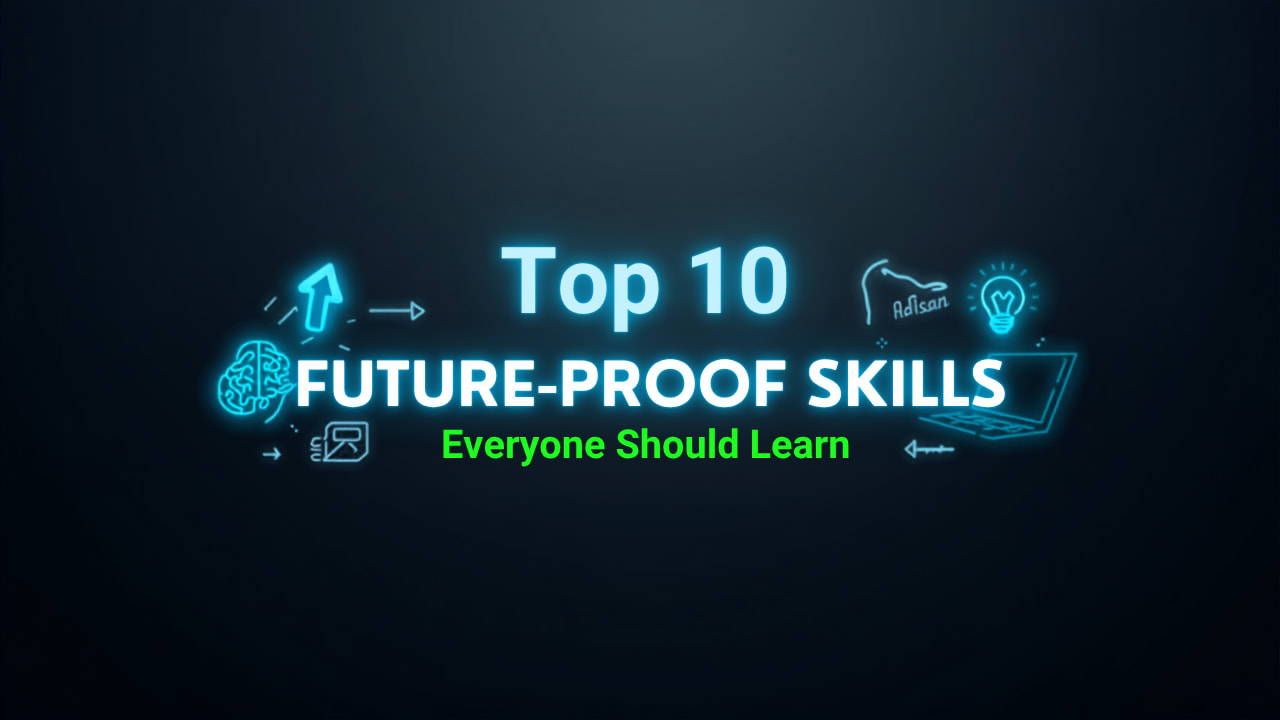
This guide explores the Top 10 Future-Proof Skills that are expected to remain valuable over the coming years. Each section explains what the skill involves, why organizations invest in it, industries where it is used, career opportunities, practical learning methods, common beginner mistakes, and long-term career prospects.
Professionals looking for structured learning can also explore platforms such as JioSkill (https://www.jioskill.com/) to discover courses that support career development across technical and workplace skills.
For additional research on global workforce trends, readers may also refer to the World Economic Forum Future of Jobs Report (https://www.weforum.org/reports/the-future-of-jobs-report/) and Microsoft Learn (https://learn.microsoft.com/) for technical learning resources.
What Are Future-Proof Skills?
Future-Proof Skills are abilities that remain valuable despite technological change, automation, and evolving business needs. They combine technical knowledge with human capabilities such as problem-solving, communication, adaptability, and continuous learning, allowing professionals to remain competitive throughout their careers.
Unlike job-specific knowledge, future-proof skills transfer across industries. Someone working in healthcare, finance, manufacturing, retail, education, or information technology can all benefit from developing these capabilities.
Organizations increasingly invest in employees who demonstrate:
Critical thinking
Data-driven decision-making
Digital literacy
Collaboration
Creativity
Adaptability
Leadership
Emotional intelligence
Technical learning ability
Continuous improvement mindset
These skills support career mobility even when industries experience disruption.
Comparison Table: Top 10 Future-Proof Skills
SkillDemandDifficultyLearning TimeCareer OpportunitiesSalary PotentialArtificial IntelligenceVery HighHigh6–12 MonthsExcellentVery HighData AnalyticsVery HighMedium4–8 MonthsExcellentHighCybersecurityVery HighHigh6–12 MonthsExcellentVery HighCloud ComputingHighMedium-High5–10 MonthsExcellentHighDigital MarketingHighMedium3–6 MonthsVery GoodHighCommunication SkillsVery HighEasy-MediumContinuousUniversalHighCritical ThinkingVery HighMediumContinuousUniversalHighEmotional IntelligenceHighMediumContinuousExcellentHighProject ManagementHighMedium4–8 MonthsExcellentHighAdaptability & Lifelong LearningVery HighMediumOngoingUniversalLong-Term Career Growth
1. Artificial Intelligence and Machine Learning
Future-Proof Skills related to Artificial Intelligence help professionals understand how intelligent systems solve business problems, automate repetitive work, and improve decision-making. As AI adoption expands across industries, professionals with practical AI knowledge continue to enjoy growing career opportunities and strong long-term demand.
Artificial Intelligence (AI) is no longer limited to research laboratories or large technology companies. Retailers use AI for recommendations, hospitals improve diagnostics with machine learning, manufacturers optimize production, and financial institutions detect fraud through intelligent algorithms.
Instead of replacing every job, AI is changing how work gets done. Employees who understand AI tools often become more productive rather than obsolete.
Why AI Matters
Artificial Intelligence has become one of the most valuable Future-Proof Skills because organizations increasingly automate repetitive tasks while creating new roles focused on designing, managing, and improving AI-powered systems.
Businesses now expect professionals to understand:
AI-assisted workflows
Prompt engineering
Machine learning basics
Predictive analytics
Generative AI applications
Responsible AI practices
Industries Using AI
Healthcare
Banking
Manufacturing
E-commerce
Telecommunications
Logistics
Education
Entertainment
Insurance
Government
Career Opportunities
Popular roles include:
AI Engineer
Machine Learning Engineer
AI Product Manager
Data Scientist
AI Consultant
NLP Engineer
Computer Vision Engineer
Practical Example
A customer support company may deploy an AI chatbot to answer common questions. Human agents then spend more time resolving complex customer issues rather than repetitive requests.
This combination improves customer satisfaction while increasing employee productivity.
How to Learn
Learn Python fundamentals.
Study statistics.
Understand machine learning concepts.
Build simple AI projects.
Explore generative AI tools.
Practice with real datasets.
Structured learning platforms, including JioSkill, can help learners build foundational digital and technical capabilities before progressing into advanced AI topics.
Common Beginner Mistakes
Focusing only on AI tools instead of concepts
Ignoring mathematics completely
Avoiding practical projects
Copying code without understanding it
Not learning ethics and responsible AI
Future Outlook
Demand for AI professionals is expected to remain strong because organizations continue integrating intelligent automation into everyday operations.
2. Data Analytics
Future-Proof Skills in data analytics enable professionals to transform raw information into meaningful business decisions. Organizations increasingly depend on evidence rather than assumptions, making analytical thinking one of the most sought-after workplace capabilities across nearly every industry.
Every business generates enormous amounts of information. Sales figures, customer behavior, website traffic, inventory records, and operational performance all create valuable datasets.
Professionals who understand how to analyze this information help organizations improve efficiency and profitability.
Why Data Analytics Matters
Data analytics stands among the most practical Future-Proof Skills because businesses consistently rely on measurable insights to improve products, reduce costs, understand customers, and forecast future performance.
Companies hire professionals who can:
Interpret dashboards
Build reports
Visualize trends
Create business insights
Present findings clearly
Industries Using Data Analytics
Finance
Healthcare
Retail
Manufacturing
Marketing
Logistics
Government
Sports
Education
Career Opportunities
Typical job titles include:
Data Analyst
Business Analyst
Marketing Analyst
Operations Analyst
Business Intelligence Analyst
Reporting Specialist
Practical Example
An online retailer analyzes purchasing behavior before festive seasons. The data helps forecast inventory requirements, preventing stock shortages while reducing excess inventory costs.
Learning Path
Learn Excel.
Study SQL.
Understand statistics.
Learn Power BI or Tableau.
Practice Python.
Build portfolio projects.
Common Mistakes
Memorizing formulas without solving business problems
Ignoring storytelling
Creating confusing dashboards
Poor data cleaning practices
Future Outlook
Organizations continue making strategic decisions through analytics, ensuring steady demand for professionals with strong analytical capabilities.
3. Cybersecurity
Future-Proof Skills in cybersecurity protect organizations from growing digital threats, making security expertise increasingly valuable as businesses expand cloud services, remote work, online transactions, and connected technologies across every sector of the economy.
Cyberattacks affect organizations of every size. Small businesses, multinational corporations, healthcare providers, educational institutions, and governments all face growing security risks.
As technology adoption increases, protecting information becomes even more critical.
Why Cybersecurity Matters
Cybersecurity remains one of the strongest Future-Proof Skills because every connected organization requires professionals who can identify risks, secure systems, respond to incidents, and reduce vulnerabilities before attackers exploit them.
Security professionals help:
Protect customer information
Prevent ransomware attacks
Secure cloud infrastructure
Monitor threats
Respond to incidents
Improve compliance
Industries Hiring Cybersecurity Professionals
Banking
Healthcare
Technology
Government
Defense
Telecommunications
Insurance
Manufacturing
Career Opportunities
Popular positions include:
Security Analyst
SOC Analyst
Ethical Hacker
Security Engineer
Incident Response Analyst
Security Consultant
Cloud Security Specialist
Practical Example
A hospital secures patient records using encryption, access controls, and continuous monitoring to protect sensitive medical information.
Learning Path
Understand networking.
Learn operating systems.
Study security fundamentals.
Practice ethical hacking.
Learn cloud security.
Earn certifications.
Common Beginner Mistakes
Learning hacking without networking basics
Ignoring documentation
Practicing only theory
Neglecting legal and ethical responsibilities
Future Outlook
Security spending continues increasing worldwide, making cybersecurity one of the most resilient career choices available.
4. Cloud Computing
Future-Proof Skills in cloud computing help professionals build, manage, and secure modern digital infrastructure. Since organizations increasingly migrate applications and services to the cloud, professionals with cloud expertise remain valuable across technology and non-technology sectors alike.
Businesses rarely rely only on traditional on-premise servers anymore. Cloud platforms provide scalability, flexibility, disaster recovery, collaboration, and cost efficiency.
This shift has transformed how software is developed, deployed, and maintained.
Why Cloud Computing Matters
Cloud computing represents one of the fastest-growing Future-Proof Skills because businesses require scalable infrastructure that supports remote work, digital services, artificial intelligence, analytics, and continuous software delivery.
Cloud professionals work with:
Virtual machines
Storage
Networking
Identity management
Containers
Serverless computing
Monitoring services
Industries Using Cloud Technology
IT Services
Healthcare
Banking
Retail
Education
Manufacturing
Government
Telecommunications
Career Opportunities
Common roles include:
Cloud Engineer
Cloud Architect
DevOps Engineer
Site Reliability Engineer
Infrastructure Engineer
Cloud Consultant
Practical Example
A growing e-commerce company expands its website capacity during major shopping festivals without purchasing additional physical servers by using cloud infrastructure.
How to Learn
Learn networking basics.
Understand Linux.
Study cloud fundamentals.
Practice with cloud platforms.
Learn containers.
Build deployment projects.
Common Learner Mistakes
Memorizing services instead of understanding architecture
Ignoring security
Avoiding hands-on labs
Skipping networking fundamentals
Future Outlook
Cloud adoption continues expanding across organizations of every size. As artificial intelligence, analytics, and digital transformation initiatives grow, cloud expertise is expected to remain among the most valuable Future-Proof Skills for years ahead.
JioSkill Team
Content Creator
Content creator at JioSkill